Morgan Silver Dollar specifications and ping frequencies
The Morgan Silver Dollar is a silver coin from the United States (1878–1921), weighing 26.73 g with a diameter of 38.1 mm. Tapped gently on its edge, a genuine one rings at about 4.4 kHz, 10.1 kHz and 17.5 kHz: its first resonance frequencies, set by its metal, size and thickness. A counterfeit made of a different metal, or with a different weight or thickness, rings at different frequencies, which is what the ping test above checks.
| Ping test reference frequencies | 4409 Hz · 10108 Hz · 17489 Hz |
|---|---|
| Metal | Silver |
| Composition | 90% silver, 10% copper |
| Weight | 26.73 g |
| Fine metal content | 24.057 g |
| Diameter | 38.1 mm |
| Thickness | 2.4 mm |
| Face value | $1 USD |
| Country | United States |
| Years | 1878 - 1921 |
Compare with the ping frequencies of every supported coin.
How to spot a fake Morgan Dollar
Morgan silver dollars (1878–1904 and 1921) are among the most counterfeited U.S. coins. Fakes range from crude copies sold as souvenirs to well-made struck counterfeits, and genuine coins are also altered to look like rarer dates. Many fakes fail simple tests, but the better ones need a combination of checks.
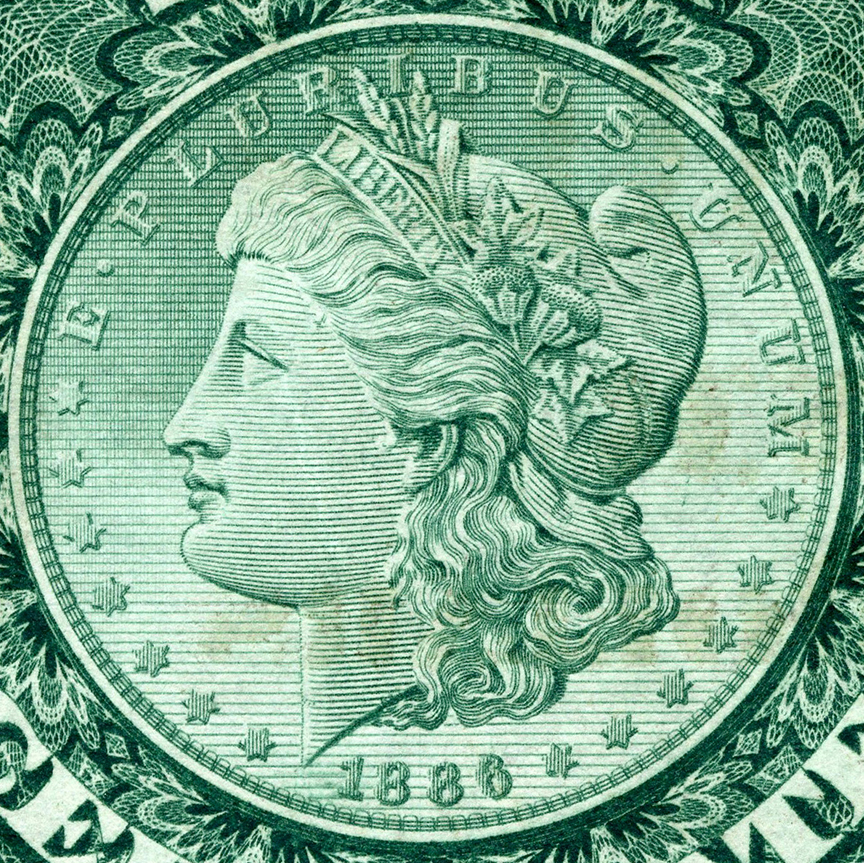
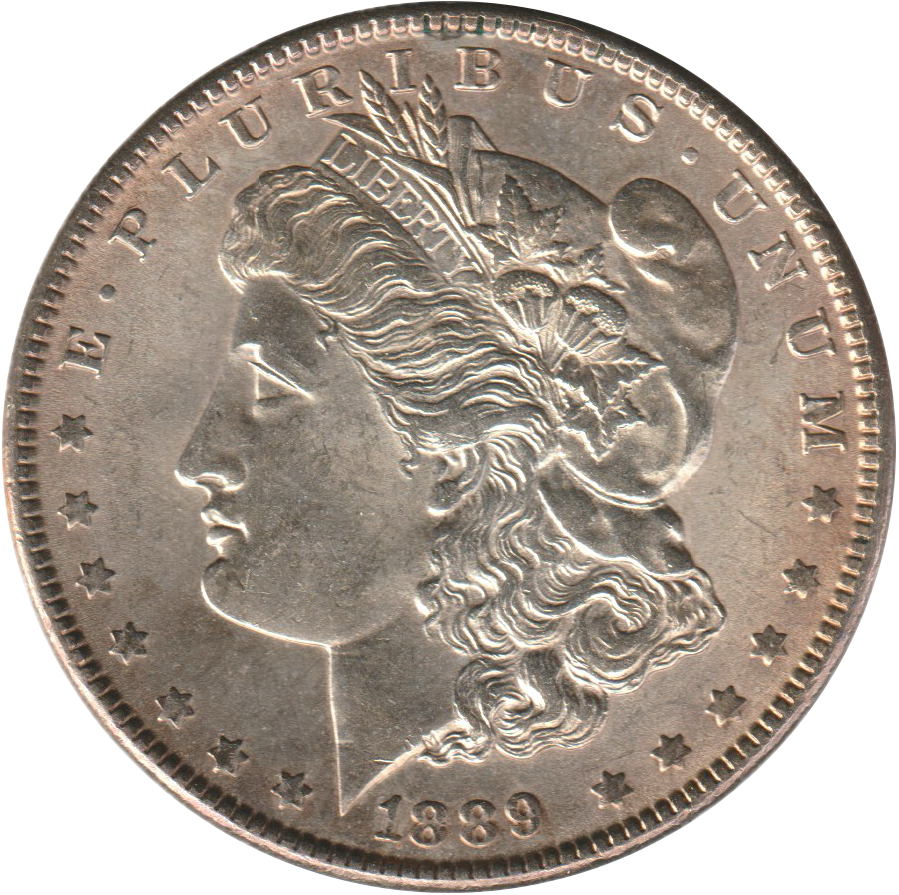
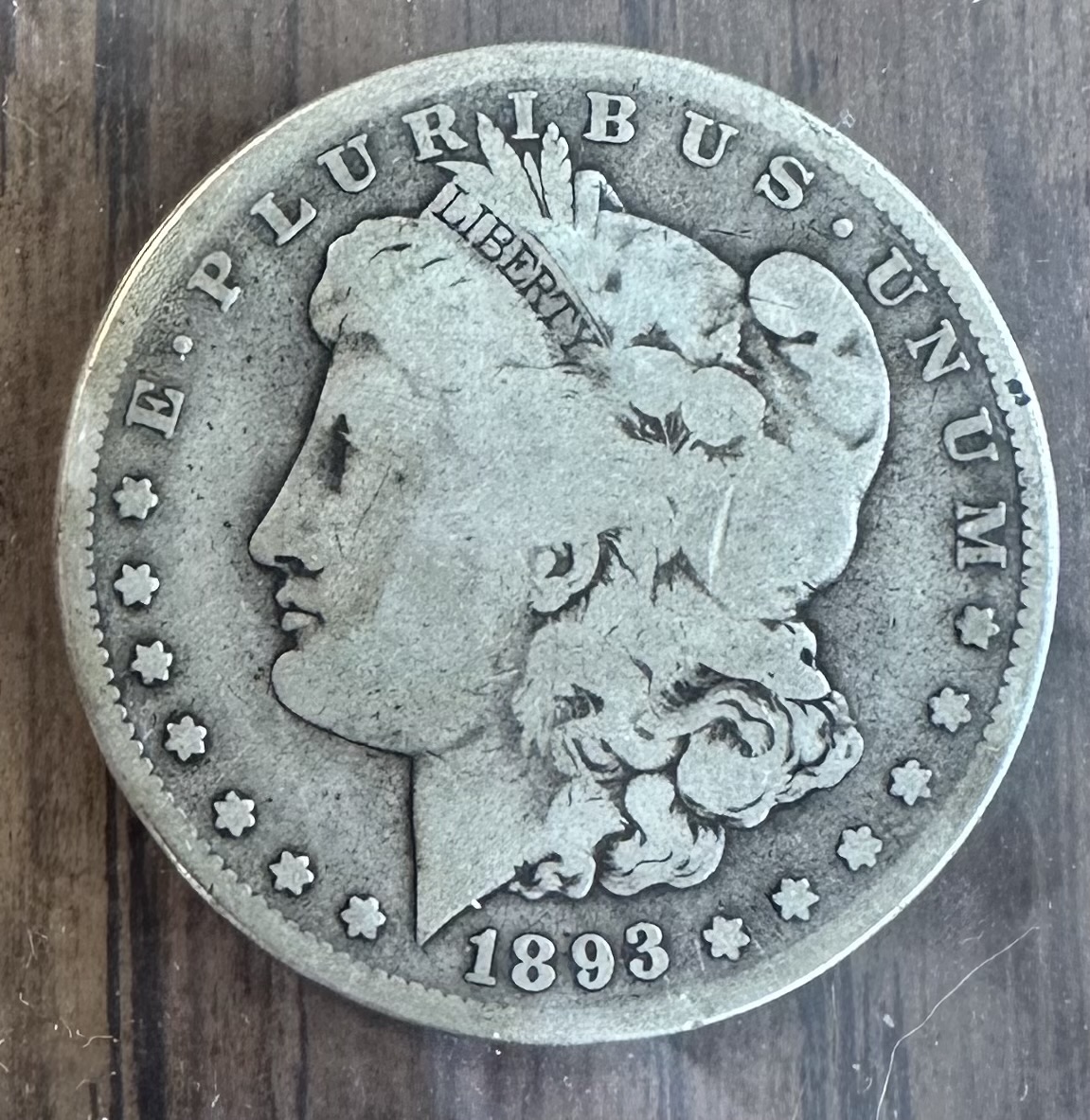 A genuine Morgan Dollar: Liberty obverse and eagle reverse.
What fakes look like
Struck counterfeits
Made from counterfeit dies on a press. They may copy common or rare dates. Because many coins come from the same fake dies, they often share the same repeated flaws, such as tooling marks or small depressions. The best of them can be close in weight and look convincing.
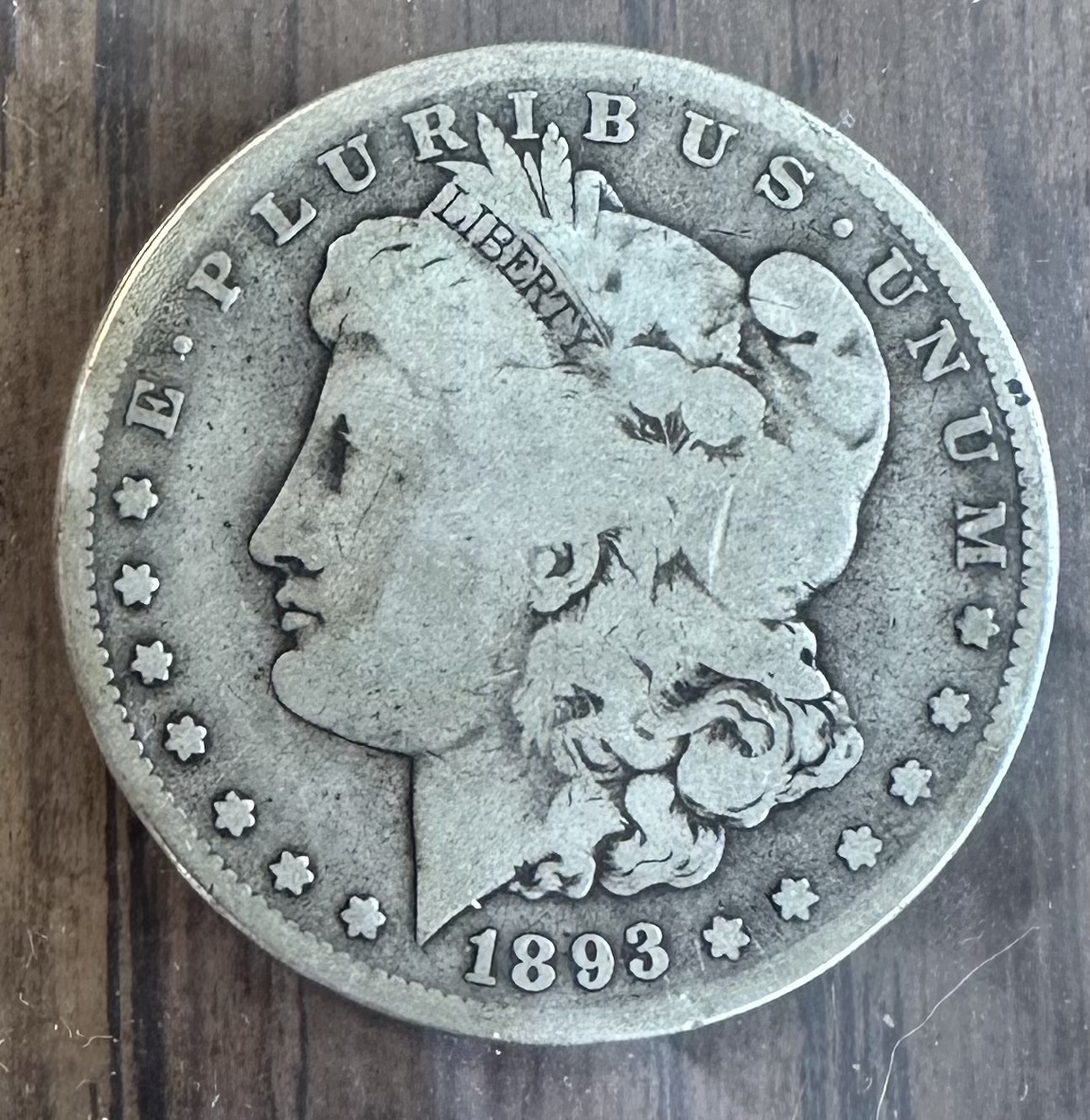 A genuine coin next to a struck counterfeit.
Altered genuine coins
A real common-date Morgan modified to look like a valuable one. Typical alterations are an added or changed mintmark (for example, adding an S to make a "1893-S"), a re-tooled date digit, or two halves of different coins joined together. The silver and weight are real, so only close inspection or a grading service catches these.
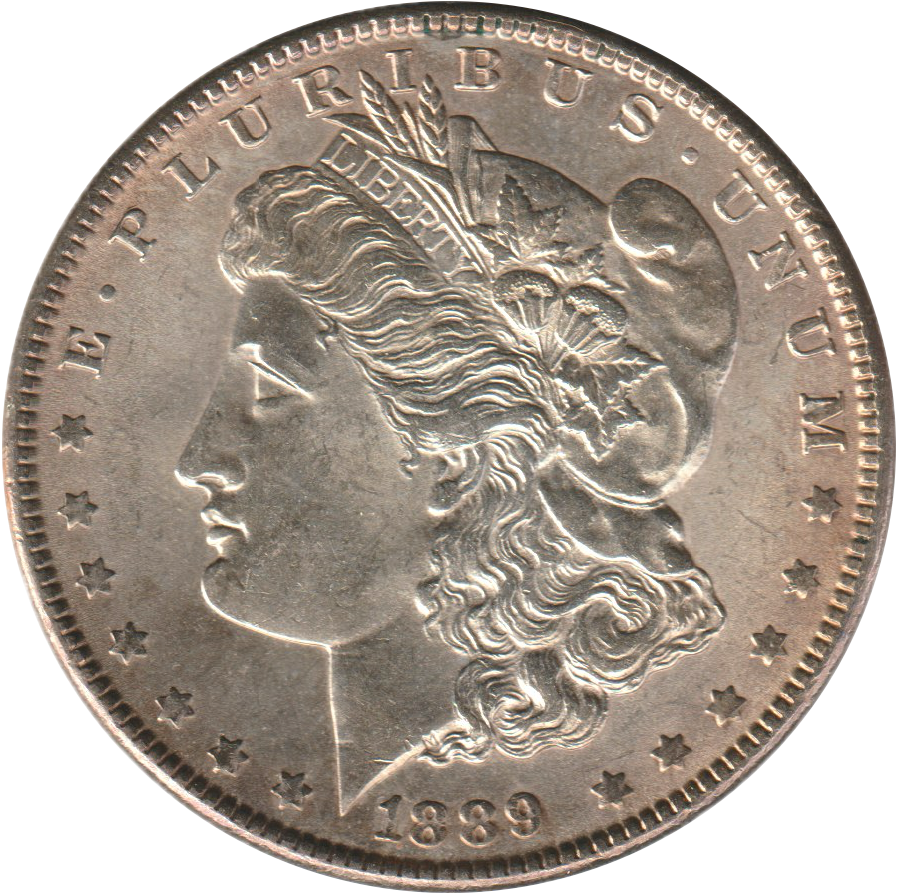 Tooling marks around an altered mintmark.
Fakes in fake holders
Counterfeit coins sealed in imitation PCGS, NGC or GSA holders, or genuine holders with the coin swapped. Always look up the certificate number online and compare the coin in hand with any database photo.
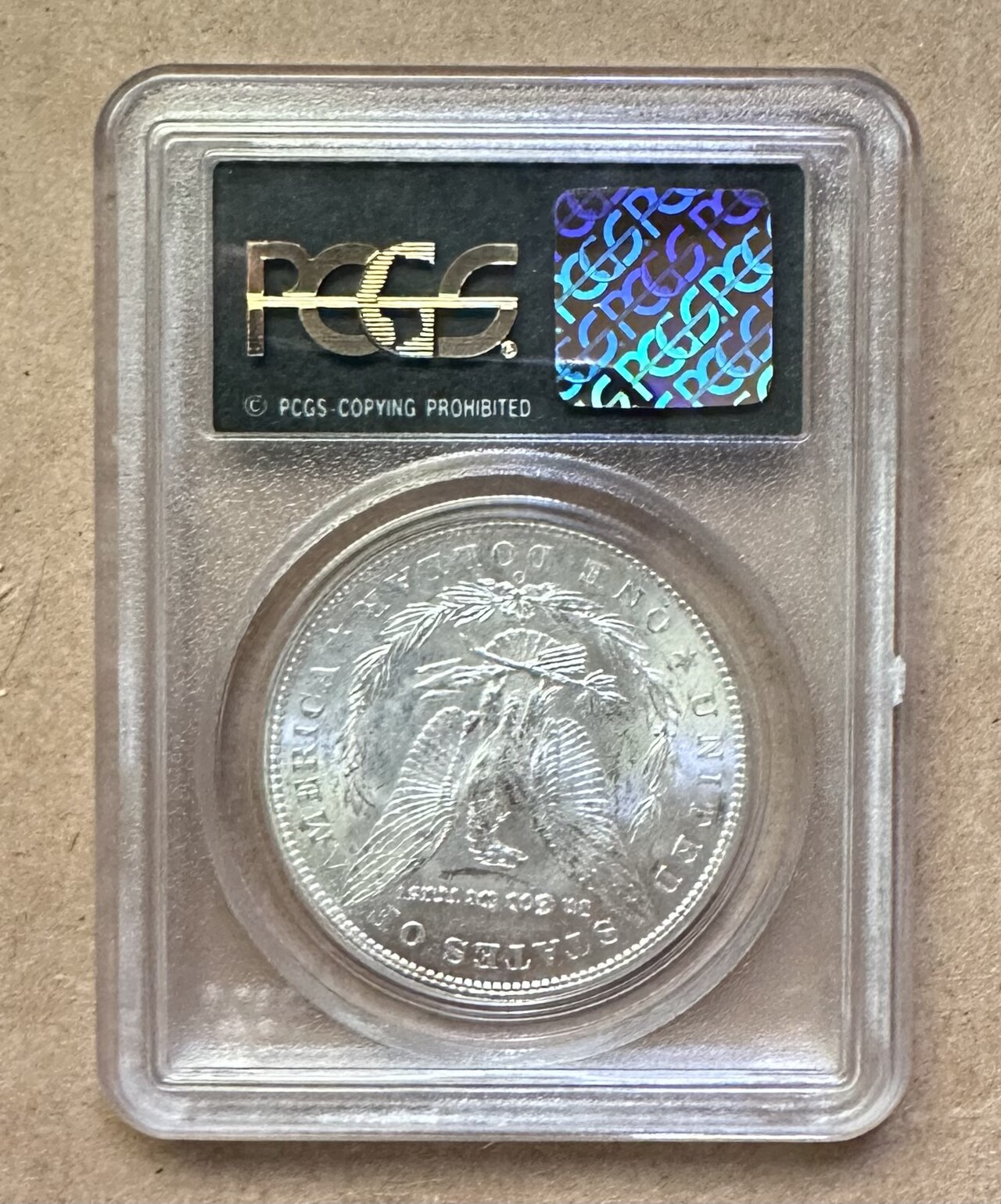 A genuine grading holder compared with an imitation.
Replicas and fantasy pieces
Sold openly as copies, sometimes with "COPY" stamped on them, which can be filed off later. Many carry dates or date and mintmark combinations that were never made.
The checks, in order
1. Weight
A genuine Morgan is 90% silver and 10% copper and weighs 26.73 g. Use a scale that reads to 0.01 g. Circulated coins can be slightly lighter from wear, but a coin that's a gram or more off is very likely fake.
2. Diameter and thickness
Measure with digital calipers and compare to the facts box on this page. A fake made of lighter metal often has to be thicker to reach the right weight.
3. Magnet
Silver isn't magnetic. If the coin sticks to a magnet, it's fake. Copper, brass, zinc and lead aren't magnetic either, so passing only rules out steel-cored fakes. As with other silver coins, a strong magnet sliding down a tilted Morgan should be slowed noticeably.
4. The ping test
Tap the coin gently while it's balanced on a fingertip or hung on a thread. A genuine Morgan gives a clear, sustained ring. Many base-metal fakes sound duller and fade faster.
The ping test at the top of this page compares the coin's sound with the frequencies a genuine Morgan should produce. It's a useful check on what the coin is made of. It won't catch an altered genuine coin, because that coin is still real silver, and it can be thrown off by background noise, how you hold the coin, heavy wear, damage or a capsule. If a result looks wrong, take the coin out of its holder, retest somewhere quiet, and back it up with the other checks.
5. Edge reeding
Genuine Morgans have a reeded edge with evenly spaced reeds (about 189 of them). Under a 10x loupe, look for:
- Uneven spacing, or reeds that look doubled or hollow
- Flat or squared-off reeds
- A seam around the edge
6. Liberty's hair
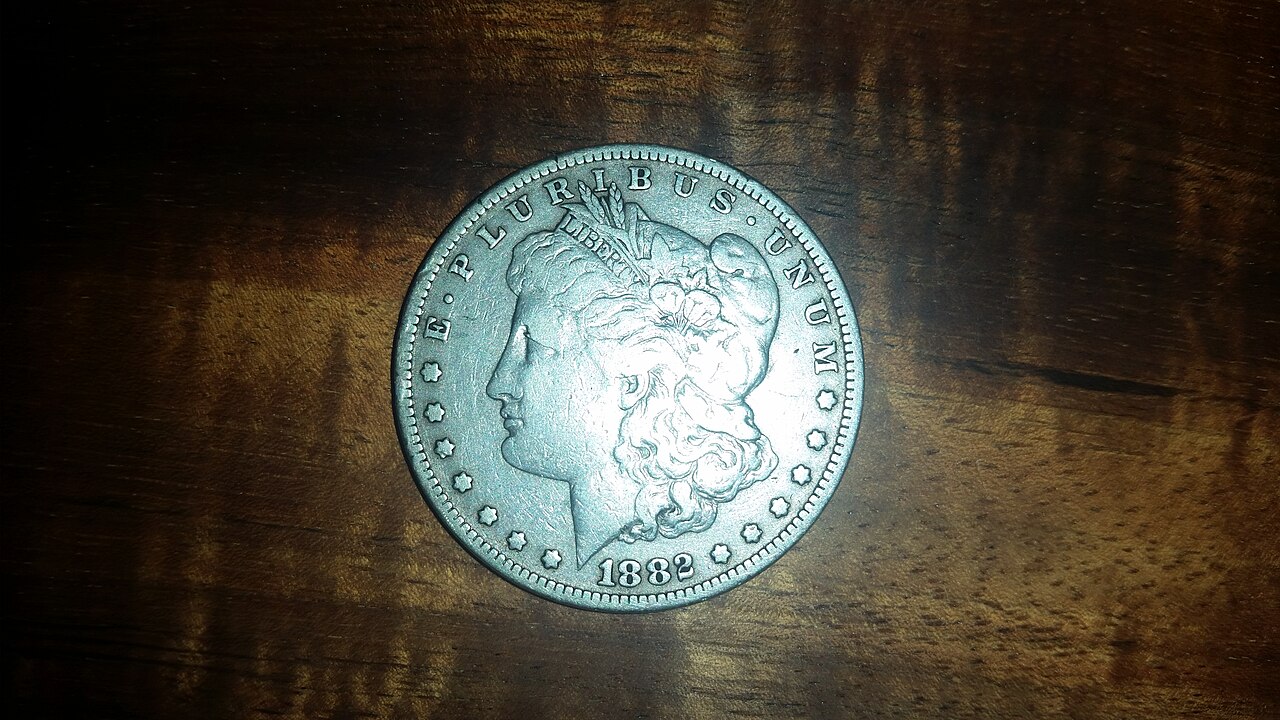 Hair detail on a genuine coin and a counterfeit.
Under magnification, a genuine coin shows distinct strands and sharp transitions in the hair, and clear cotton bolls and wheat in the headband. Fakes often look mushy, with strands that run together. Allow for wear and weak strikes; compare with genuine coins of the same date and mint.
7. Reverse detail and "UNUM"
Check the eagle's feathers, the wreath and the lettering for sharpness and even spacing. Many collectors also look at the M in UNUM: on many genuine coins it sits clear of the feather tips below, while on many fakes it touches them. This varies between die varieties, so treat it as a quick hint and compare with reference images for the same date and mint, not as a rule.
 The M in UNUM and the feather tips beneath it.
8. Surface
Genuine uncirculated Morgans usually show "cartwheel" luster, a band of light that rotates as you tilt the coin. Warning signs:
- A granular, greasy or "orange peel" surface
- Dull, lifeless luster on a coin sold as uncirculated
- Toning that looks painted or chemically applied
- A coin that looks too perfect for its supposed grade
9. Mintmark
 Genuine and altered mintmarks.
The mintmark sits on the reverse, below the wreath and above the "DO" in DOLLAR. Philadelphia coins have no mintmark; the others are O (New Orleans), S (San Francisco), CC (Carson City) and D (Denver, 1921 only). Look for marks that are crooked, the wrong size or style, or surrounded by disturbed metal, which can mean it was added.
Dates and mintmarks that never existed
If a coin's date and mint don't match a real issue, it's fake. Common examples:
- Any date from 1905 to 1920. No Morgans were struck in those years.
- CC coins dated 1886–1888 or 1894 onward. Carson City struck Morgans from 1878 to 1885 and from 1889 to 1893 only.
- 1921-O or 1921-CC. In 1921 Morgans were struck only at Philadelphia, Denver and San Francisco.
- 1895 Philadelphia business strikes. Only proofs are known for 1895 Philadelphia, so a circulated or regular 1895 with no mintmark should be treated as fake or altered. Genuine 1895-O and 1895-S coins do exist.
Since 2021 the U.S. Mint has also issued modern Morgan dollars in .999 silver. They are genuine but are a different coin from the originals, so check their specifications separately.
Key dates that need extra care
Valuable dates attract both counterfeits and altered coins. These include the 1893-S (the lowest-mintage business strike), 1889-CC, 1884-S, 1892-S, 1879-CC, 1881-CC and other Carson City dates. For any of these, a bargain price is a warning sign. Buy them only in a PCGS or NGC holder whose certificate number you've checked, from a dealer you trust.
Where risk is higher
Fakes most often come through sellers you can't hold to account: unknown or overseas marketplace accounts, social media listings, flea markets, estate sales, and coin show tables from dealers you don't know. Established dealers, major auction houses and verified graded coins are lower risk.
If you suspect a fake
- Stop. Don't sell it on or trade it, even with a warning. Selling counterfeit U.S. coins as genuine is illegal.
- Test further. Repeat the weight, dimension and ping tests, then take it to a dealer or send it to a grading service.
- Document it. Photograph the coin, your measurements and your purchase records.
- Contact the seller. Ask for a refund. If that fails, use your marketplace or card dispute process.
- Report it if you think a seller is knowingly dealing in fakes. Counterfeits of U.S. coins can be reported to the Secret Service.
For other U.S. silver dollars, see how to spot a fake Peace Dollar.
Quick checklist
- Weight close to 26.73 g
- Diameter and thickness match the facts box
- Not attracted to a magnet
- Ping test matches a genuine coin
- Even edge reeding with no seam
- Sharp hair and feather detail
- Natural luster and toning
- Mintmark looks right and sits in the right place
- The date and mint combination really exists
- Realistic price, reputable seller
About the Morgan Dollar
Morgan silver dollars were minted from 1878 to 1904 and again in 1921, designed by George T. Morgan. They are among the most collected and counterfeited U.S. coins. Key rarities like the 1893-S are prime targets for counterfeiters. Modern fakes, often from China, have become increasingly sophisticated. NGC and PCGS maintain databases of known counterfeits and provide authentication services.
Authenticate Your Morgan Dollar on the Go
Download Pingcoin for iPhone or Android to instantly verify your Morgan Dollar and other precious metal coins using acoustic authentication.