1 oz Gold Krugerrand specifications and ping frequencies
The 1 oz Gold Krugerrand is a gold coin from South Africa (1967–2026), weighing 33.93 g with a diameter of 32.77 mm. Tapped gently on its edge, a genuine one rings at about 4.8 kHz, 10.9 kHz and 18.6 kHz: its first resonance frequencies, set by its metal, size and thickness. A counterfeit made of a different metal, or with a different weight or thickness, rings at different frequencies, which is what the ping test above checks.
| Ping test reference frequencies | 4795 Hz · 10872 Hz · 18645 Hz |
|---|---|
| Metal | Gold |
| Composition | 91.67% gold, 8.33% copper |
| Weight | 33.93 g |
| Fine metal content | 31.104 g |
| Diameter | 32.77 mm |
| Thickness | 2.84 mm |
| Country | South Africa |
| Years | 1967 - 2026 |
Compare with the ping frequencies of every supported coin.
How to spot a fake Krugerrand
The South African Krugerrand was first minted in 1967, making it the first modern gold bullion coin. Because it is so widely recognised and traded, it is also widely counterfeited, from cheap plated copies to fakes built around a tungsten core that are made to hit the right weight.
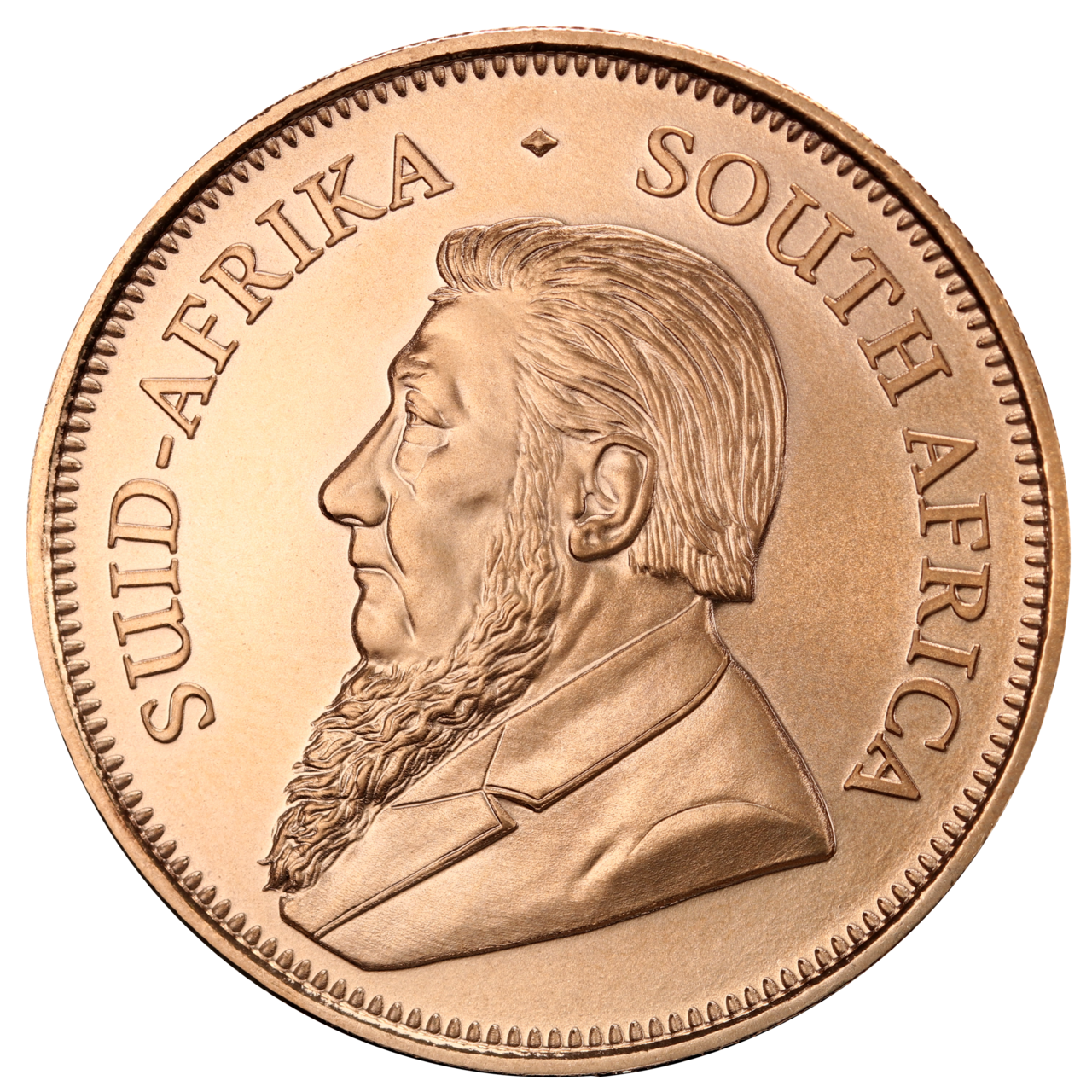 A genuine 1 oz Krugerrand: Paul Kruger on the obverse, the springbok on the reverse.
What fakes exist
Gold-plated base metal. Brass or copper with a thin gold layer. Usually the wrong weight, sometimes the wrong size, and the plating can wear through on high points.
Tungsten-core fakes. Tungsten is almost as dense as gold, so a tungsten centre wrapped in gold can come close to the correct weight and size. These are the hardest fakes to catch with a scale and calipers alone.
Cast fakes. Poured into a mould rather than struck. Look for a grainy or porous surface, soft details and poor reeding.
Struck counterfeits. Made on a press with copied dies. Details can be close to genuine, but the metal, weight or dimensions are often off.
The checks, in order
1. Weight
A genuine 1 oz Krugerrand weighs 33.93 g. It weighs more than 1 troy ounce because it is 22-carat: one ounce of fine gold plus copper. Use a scale that reads to 0.01 g.
- Plated fakes are often clearly light or heavy.
- A coin that is more than a few hundredths of a gram off, without visible wear or damage to explain it, should be tested further.
- A correct weight does not prove the coin is genuine. Tungsten-core fakes are made to pass this test.
2. Diameter and thickness
Measure with digital calipers and compare with the facts box on this page. A fake made from a lighter metal has to be thicker or wider to reach the right weight. Check the thickness at several points round the coin; uneven thickness is a warning sign.
3. Colour
Because the Krugerrand is 22-carat gold alloyed with copper, it has a warmer, more orange tone than 24-carat coins such as the Maple Leaf or Philharmonic. A coin that looks bright yellow, or brassy, or has patches of different colour, deserves a closer look. Colour is easiest to judge next to a Krugerrand you know is genuine.
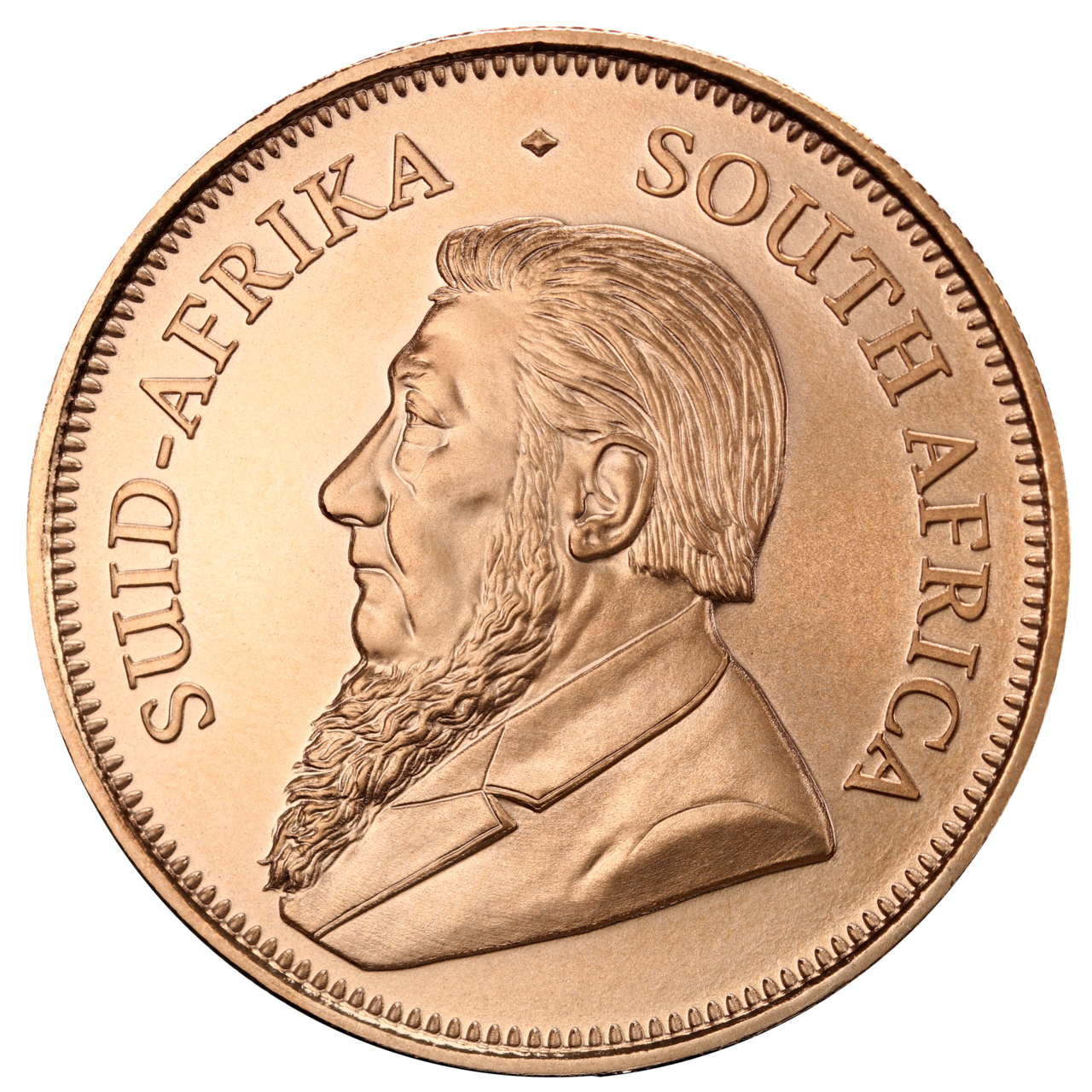
4. Design details
Use a 10x loupe.
Obverse (Paul Kruger):
- Beard and hair should show separate strands, not a soft mass.
- The eye should be clearly defined.
- "SUID-AFRIKA" and "SOUTH AFRICA" should be crisp and evenly spaced.
Reverse (springbok):
- The springbok should show muscle definition, sharp horns and clear legs and hooves.
- The grass below should show separate blades.
- "KRUGERRAND", the date and "FYNGOUD 1 OZ FINE GOLD" should be cleanly struck.
Surface: bullion coins have a consistent finish. A grainy or "sandy" texture, pits or bubbles suggest a cast fake. A heavily artificial "aged" look, or an oddly pristine surface on a coin claimed to be decades old, is also worth questioning.
5. Edge
Bullion Krugerrands have a reeded edge with 160 serrations; proofs have 220. Reeds should be even in spacing and depth all the way round. Look under magnification for a seam or join line around the edge, which can indicate a coin assembled from parts, as well as uneven, shallow or smeared reeding.
6. Magnet
Gold is not magnetic. Hold a strong neodymium magnet near the coin. Any attraction means steel or iron inside, and the coin is fake. Passing this test only rules out ferrous cores: tungsten, brass and copper are not magnetic either.
7. Ping test
A genuine Krugerrand gives a clear ring when balanced on a fingertip and tapped gently with another coin. Gold and tungsten have very different stiffness (about 78 GPa versus 411 GPa), so a coin with a tungsten core usually resonates differently from a solid gold-copper coin of the same size. The ping test at the top of this page listens for the coin's resonant frequencies and compares them with a genuine Krugerrand.
It is one strong check among several, not a final verdict. Background noise, how the coin is held, damage or a capsule can throw it off, and it may miss some fakes. If the result disagrees with your other checks, take the coin out of its holder and try again in a quiet room.
8. Further testing
- Specific gravity: weighing the coin in air and in water gives its density. 22-carat gold comes out around 17.8. Plated base metal will be far lower, but a tungsten-core fake can come close, so treat this as one more data point.
- Electromagnetic testers such as the Sigma Metalytics measure conductivity below the surface and are good at catching tungsten-core and plated fakes.
- XRF analysis, available at many dealers, reads the composition of the surface. It confirms the plating is the right alloy but cannot see a core underneath.
Using several of these together is far more reliable than any one alone.
Date and variety tells
- 1967 to 1979: only the 1 oz coin was made. Fractional Krugerrands (½, ¼ and ⅒ oz) were introduced in 1980, so a fractional coin dated before 1980 is not genuine.
- 2017: the 50th anniversary year included special issues with a "50" privy mark. Check any privy-marked coin against reference images for that year.
- Proofs have a mirror finish, higher relief and 220 edge serrations. A coin sold as a proof with bullion reeding, or the other way round, is suspect.
Graded coins
PCGS and NGC graded coins have been examined by experts. Fake slabs exist, so always look up the certificate number (PCGS, NGC) and check that the coin, date and grade in the database match.
If you suspect a fake
- Stop. Don't buy it, and if you already own it, don't sell or trade it on.
- Repeat the weight, size and ping tests carefully.
- Compare it with a Krugerrand you know is genuine.
- Take it to a reputable bullion dealer for an electromagnetic or XRF test, or send it for professional authentication.
- If you bought it, contact the seller with your evidence and ask for a refund.
Related guides
About the Krugerrand
First minted in 1967, the Krugerrand was the world's first modern gold bullion coin and helped establish the gold investment market.
Authenticate Your Krugerrand on the Go
Download Pingcoin for iPhone or Android to instantly verify your Krugerrand and other precious metal coins using acoustic authentication.