1 oz Gold American Eagle specifications and ping frequencies
The 1 oz Gold American Eagle is a gold coin from the United States (1986–2026), weighing 33.93 g with a diameter of 32.7 mm. Tapped gently on its edge, a genuine one rings at about 4.5 kHz, 10.5 kHz and 18.1 kHz: its first resonance frequencies, set by its metal, size and thickness. A counterfeit made of a different metal, or with a different weight or thickness, rings at different frequencies, which is what the ping test above checks.
| Ping test reference frequencies | 4517 Hz · 10454 Hz · 18082 Hz |
|---|---|
| Metal | Gold |
| Composition | 91.67% gold, 3% silver, 5.33% copper |
| Weight | 33.93 g |
| Fine metal content | 31.104 g |
| Diameter | 32.7 mm |
| Thickness | 2.87 mm |
| Face value | $50 USD |
| Country | United States |
| Years | 1986 - 2026 |
Compare with the ping frequencies of every supported coin.
How to spot a fake American Gold Eagle
The American Gold Eagle is the most widely held gold bullion coin in the United States. Cheap fakes are gold-plated base metal and are easy to catch. The harder ones are made with a tungsten core, because tungsten is almost exactly as dense as gold. That means weight and size alone can't clear a coin, so you need to combine several checks.
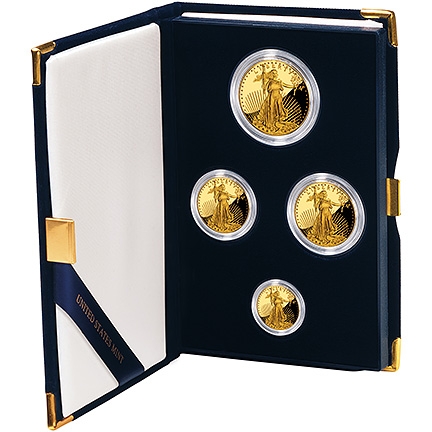 A genuine 1 oz Gold Eagle: Saint-Gaudens Liberty obverse and Family of Eagles reverse.
What fakes look like
Gold-plated base metal
Brass, copper or another base metal with a gold plating. These are usually the wrong weight or the wrong size, because no common base metal is as dense as gold. A scale and calipers catch most of them.
Tungsten-core fakes
A tungsten core wrapped in or plated with gold. Gold is about 19.3 g/cm³ and tungsten about 19.25 g/cm³, so a well-made one can hit the right weight and dimensions. Because the outside is real gold, surface tests such as acid or a quick XRF reading can also pass. These are the fakes the rest of this guide is mostly about.
Struck copies
Fakes struck from counterfeit dies. Their design detail varies from crude to convincing, and they can be made from any of the materials above.
Why the Gold Eagle weighs more than an ounce
The Gold Eagle is 22 karat: 91.67% gold, with silver and copper added for durability. It contains one troy ounce of pure gold, so the whole coin weighs 33.931 g. Don't compare it to 24-karat coins like the Buffalo or Maple Leaf, which weigh 31.1 g. The alloy also gives the Eagle a slightly warmer, more orange tone than pure gold.
The checks, in order
1. Weight
Use a scale that reads to 0.01 g. A genuine 1 oz Gold Eagle weighs 33.931 g.
- Very close to 33.93 g: passes, keep testing.
- More than a few tenths of a gram off: very likely fake.
Weight catches most plated fakes. It does not rule out a well-made tungsten fake.
2. Diameter and thickness
Measure with digital calipers and compare to the facts box on this page. A coin that's the right weight but too thick or too thin is a strong warning sign, because it means the material inside isn't the right density. Measure thickness in a few places.
3. Magnet
Gold isn't magnetic. If the coin is attracted to a magnet, it's fake. Tungsten, brass and copper aren't magnetic either, so passing only rules out steel-cored fakes.
4. The ping test
Tap the coin gently while it's balanced on a fingertip or hung on a thread. A genuine Gold Eagle rings with a clear tone. Tungsten is several times stiffer than gold, so a tungsten core changes the coin's resonant frequencies even when the weight is right.
The ping test at the top of this page compares the coin's sound with the frequencies a genuine Gold Eagle should produce. It's one of the few checks you can do at home that responds to what's inside the coin rather than just its surface, which makes it especially useful for this coin. It can still miss some fakes, and it can be thrown off by background noise, how you hold the coin, damage, or a capsule. If you get an unexpected result, take the coin out of its capsule, retest somewhere quiet, and back it up with the other checks here.
5. Design detail
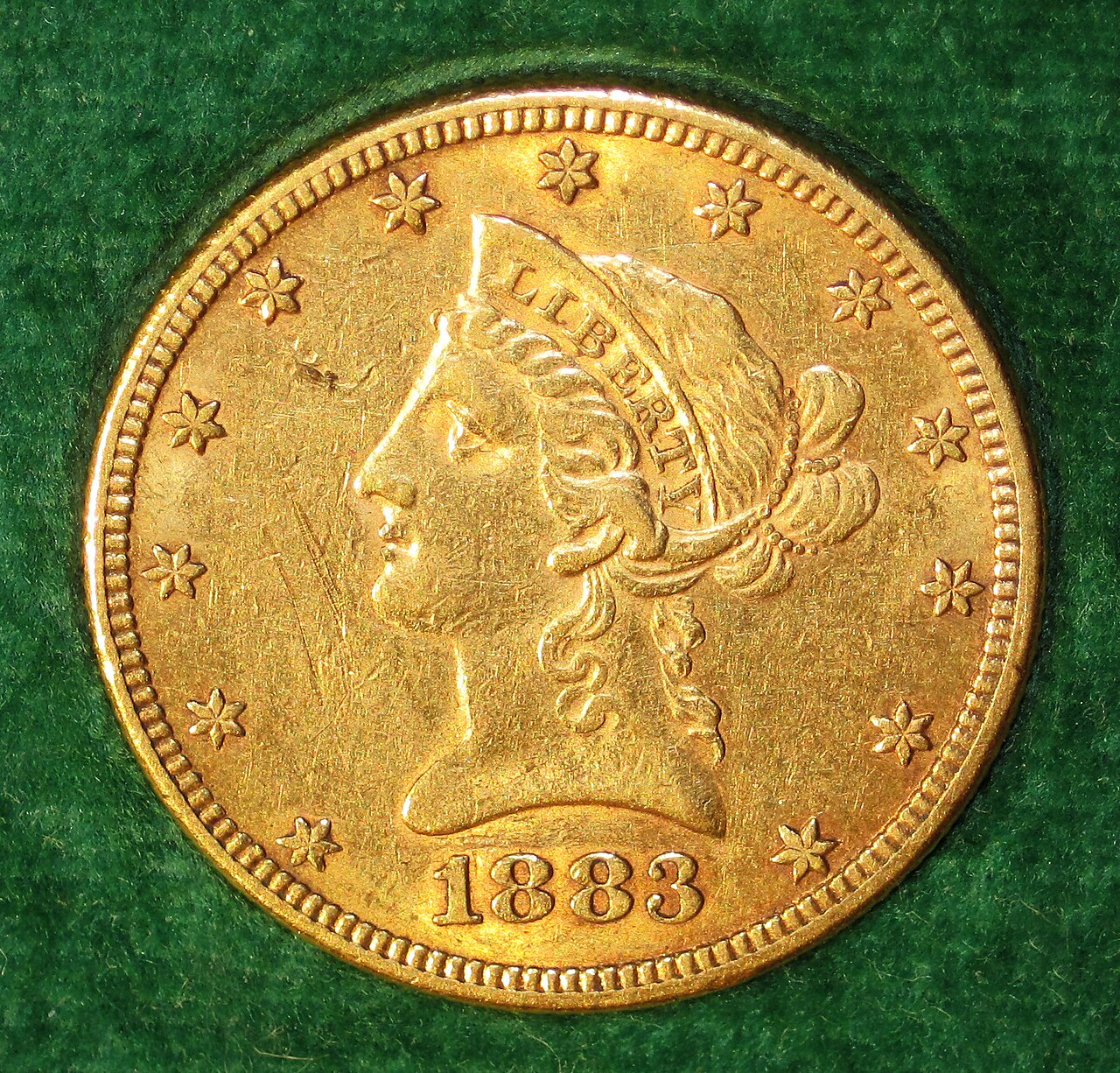 Look closely at Liberty's gown, the torch and the sun's rays.
Use a 10x loupe and compare against official U.S. Mint images for the same year and type.
Obverse (Liberty): genuine coins show distinct folds in the gown, a clear torch flame, clean sun rays and crisp lettering. Fakes often look soft or mushy in these areas.
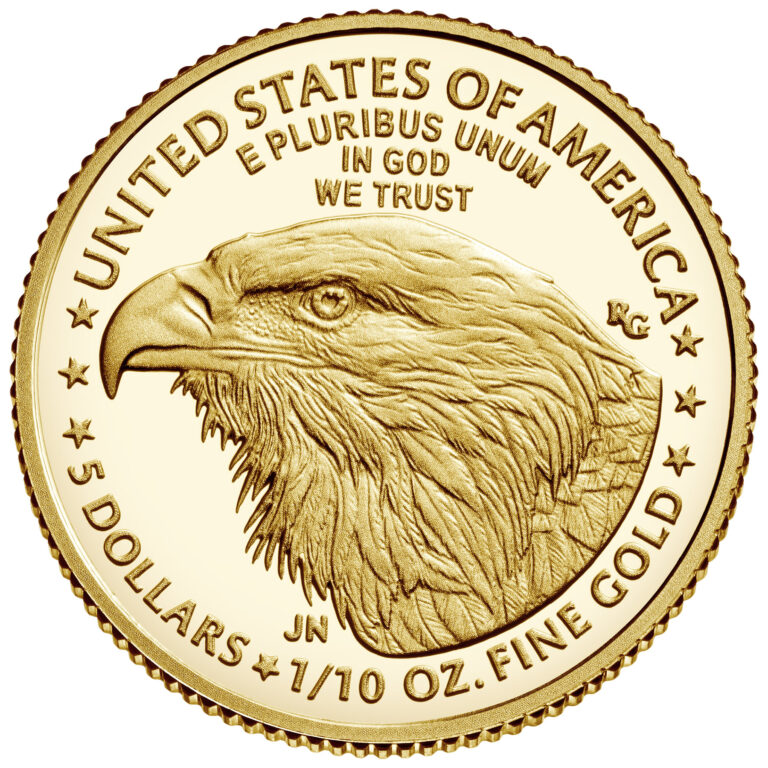 Feather detail on the Type 1 Family of Eagles reverse.
Reverse: the Type 1 reverse (1986–2021) shows a male eagle carrying a branch over a nest with a female and hatchlings. Look for separated feathers and clear nest detail. In mid-2021 the Mint switched to the Type 2 reverse, a close-up of an eagle's head designed by Jennie Norris. The reverse must match the date: a Type 2 reverse dated before 2021, or a Type 1 reverse dated 2022 or later, is fake.
6. Edge
Genuine Gold Eagles have a reeded edge with even, consistent reeds. Rotate the coin slowly under a loupe and look for:
- A seam or join line around the edge (a sign of a core wrapped in a gold shell)
- Uneven reeds, or reeds that fade out before the rim
- Color changes along the edge
Type 2 coins have an added security feature in the edge reeding. If you have a Type 2, compare its edge with U.S. Mint images.
7. Surface
Genuine coins have smooth fields and a consistent luster. Porosity, pitting, an "orange peel" texture, or color that differs at the high points all suggest a cast or plated fake.
8. Conductivity and professional testing
A conductivity meter such as a Sigma Metalytics verifier measures the metal below the surface and is a good way to check for a tungsten core. Many dealers have one. Other options are specific gravity testing (which won't catch tungsten, since its density is so close to gold's), ultrasound, or a professional assay. Surface-only methods like acid testing or a quick XRF reading can be fooled by a real gold shell, and acid can damage the coin.
Dates and versions that need extra care
- Proofs and burnished coins sell at a premium over bullion and are worth faking for that reason. Buy them in original Mint packaging from a reputable source, or in a verified PCGS or NGC holder.
- 2021, when both Type 1 and Type 2 were issued.
- Fractional sizes (1/2, 1/4 and 1/10 oz) are faked too. They have their own weights and sizes, so don't test them against the 1 oz figures.
Fake grading holders exist. Always look up the certificate number online and check that the coin in hand matches any database photo.
Where risk is higher
Fakes most often come through sellers you can't hold to account: unknown or overseas marketplace accounts, social media listings, flea markets, gun shows, and private sales. A price at or below the gold spot price is a strong warning sign, since genuine Gold Eagles normally sell above spot. If a seller won't let you test the coin before buying, walk away.
If you suspect a fake
- Stop. Don't sell it on or trade it, even with a warning.
- Test further. Repeat the weight, dimension and ping tests carefully, then ask a dealer to check it with a conductivity meter, or get a professional assay.
- Document it. Photograph the coin, your measurements and your purchase records.
- Contact the seller. Ask for a refund. If that fails, use your marketplace or card dispute process.
- Report it if you think a seller is knowingly dealing in fakes. In the U.S., counterfeits of U.S. coins can be reported to the Secret Service.
Quick checklist
- Weight close to 33.93 g (1 oz coin)
- Diameter and thickness match the facts box
- Not attracted to a magnet
- Ping test matches a genuine coin
- Sharp design detail; reverse type matches the date
- Even reeding with no seam on the edge
- Smooth surfaces and consistent color
- Realistic price, reputable seller, testing allowed
About the American Eagle
First issued in 1986, the American Gold Eagle is the official gold bullion coin of the United States and one of the world's most popular investment coins.
Authenticate Your American Eagle on the Go
Download Pingcoin for iPhone or Android to instantly verify your American Eagle and other precious metal coins using acoustic authentication.