1 oz Silver American Eagle specifications and ping frequencies
The 1 oz Silver American Eagle is a silver coin from the United States (1986–Present), weighing 31.1 g with a diameter of 40.6 mm. Tapped gently on its edge, a genuine one rings at about 3.7 kHz, 8.6 kHz and 15.1 kHz: its first resonance frequencies, set by its metal, size and thickness. A counterfeit made of a different metal, or with a different weight or thickness, rings at different frequencies, which is what the ping test above checks.
| Ping test reference frequencies | 3740 Hz · 8643 Hz · 15056 Hz |
|---|---|
| Metal | Silver |
| Composition | 99.9% silver, 0.1% copper |
| Weight | 31.1 g |
| Fine metal content | 31.069 g |
| Diameter | 40.6 mm |
| Thickness | 2.98 mm |
| Face value | $1 USD |
| Country | United States |
| Years | 1986 - Present |
Compare with the ping frequencies of every supported coin.
How to spot a fake American Silver Eagle
The American Silver Eagle is one of the most widely traded silver bullion coins, and that makes it a common target for counterfeiters. Most fakes are made for buyers who don't test, so a few simple checks catch a lot of them. No single test catches everything, so use several.
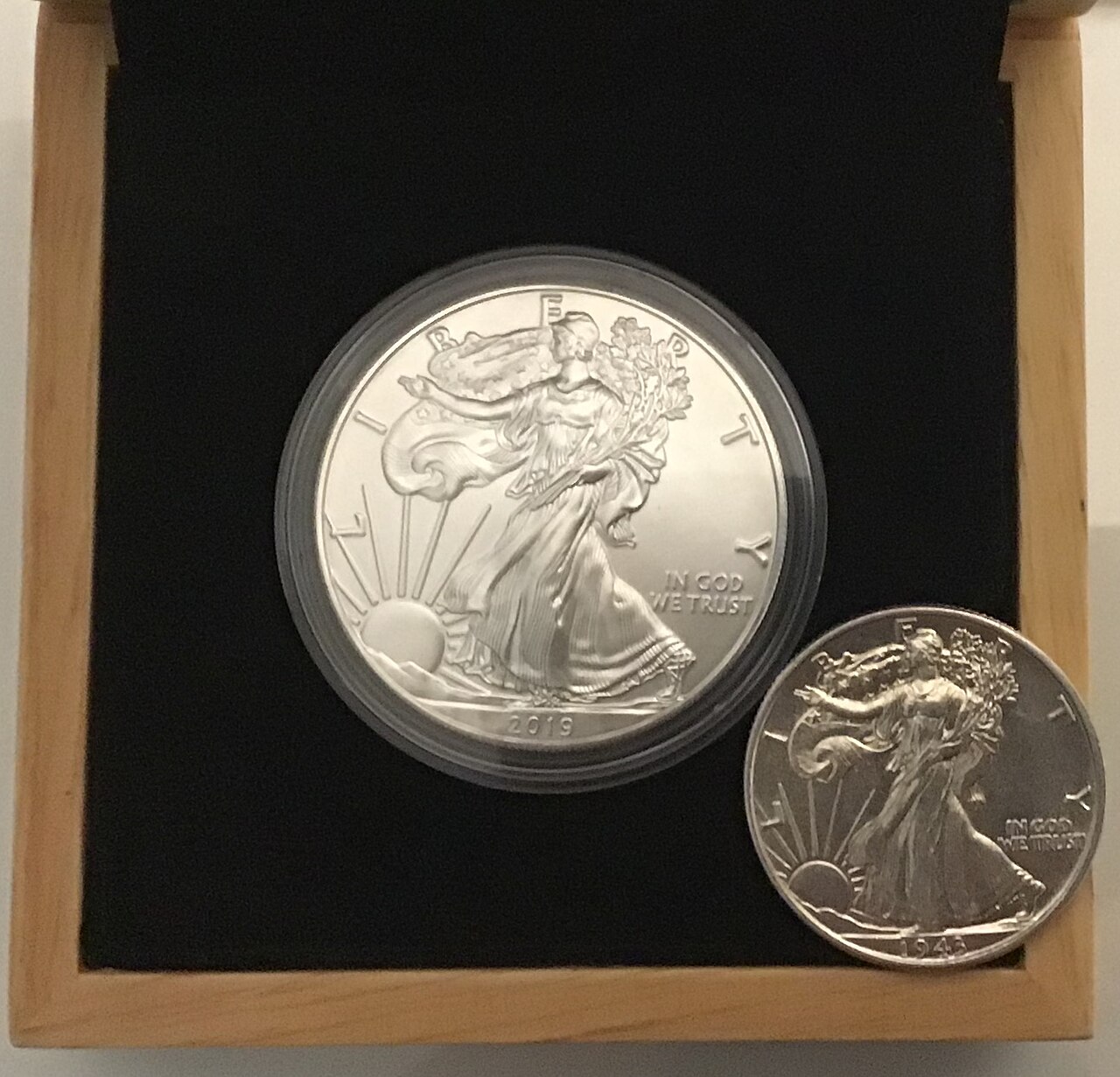 A genuine Silver Eagle: Walking Liberty obverse and Type 1 heraldic eagle reverse (1986–2021).
What fakes look like
Silver-plated base metal
The most common kind. A copper, brass or zinc alloy coin with a thin silver plating. These are usually underweight or have the wrong thickness, because base metals are lighter than silver. A scale and calipers catch most of them.
Cast fakes
Made by pouring metal into a mold rather than striking it. Look for a grainy or porous "orange peel" surface, soft details, and sometimes a seam line around the edge.
Struck counterfeits
Made with counterfeit dies on a press, like a real coin. Better ones can be close in weight and size and look convincing at a glance. Catching these takes a combination: close inspection of the design, the edge, and a material test such as the ping test or a conductivity meter.
The checks, in order
1. Weight
A genuine Silver Eagle contains one troy ounce of silver and weighs 31.103 g. Use a scale that reads to 0.01 g.
- Very close to 31.10 g: passes, keep testing.
- A few tenths of a gram off: be suspicious and test further.
- A gram or more off: very likely fake.
A correct weight doesn't prove the coin is genuine; it just rules out the lazier fakes.
2. Diameter and thickness
Measure with digital calipers and compare to the facts box on this page. Fakes made from lighter metals often have to be thicker or wider to reach the right weight, so check both dimensions, and measure thickness in a few places to spot an uneven coin.
3. Magnet
Silver is not magnetic. If the coin sticks to a magnet, it's fake.
You can also do the slide test: tilt the coin at about 45° and let a strong neodymium magnet slide down it. Silver is a very good electrical conductor, so the moving magnet induces eddy currents that slow it down noticeably. If the magnet slides off at full speed, be suspicious. Copper also slows the magnet, so passing this test isn't proof on its own.
The magnet test is quick and free, but it mainly catches steel-cored fakes. Treat it as one check among several.
4. The ping test
Tap the coin gently while it's balanced on a fingertip or hung on a thread. Genuine silver gives a clear, sustained ring. Many base-metal fakes sound duller and fade faster.
The ping test at the top of this page listens for the resonant frequencies a genuine Silver Eagle should produce. It's a strong check because it responds to what the whole coin is made of, not just the surface. It can still miss some fakes, and it can be thrown off by background noise, how you hold the coin, damage, or a capsule. If a result looks wrong, take the coin out of its capsule, try again somewhere quiet, and back it up with the other tests here.
5. Obverse design (Walking Liberty)
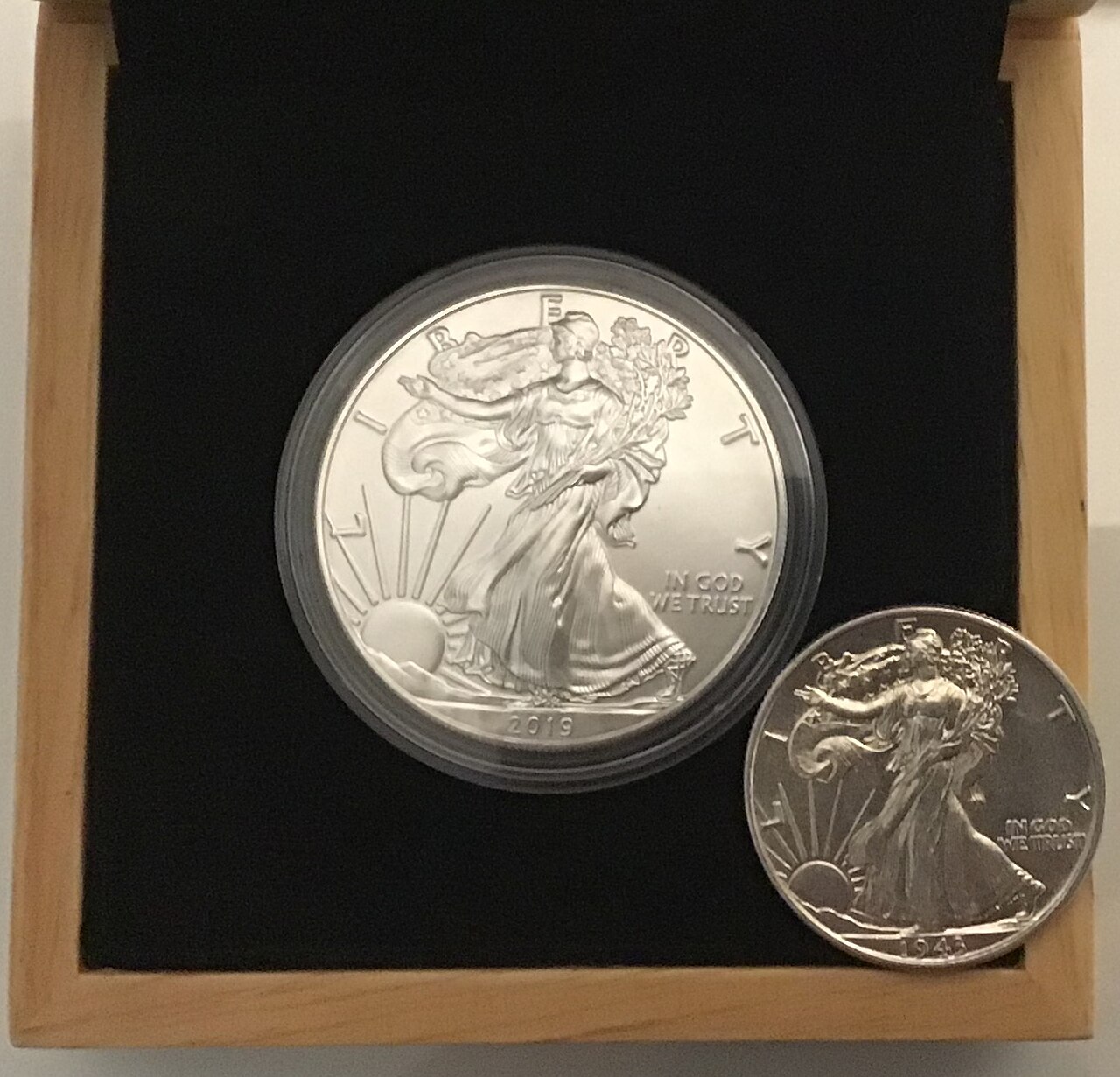 Compare the sharpness of Liberty's gown, the sun's rays and the lettering.
Use a 10x loupe and compare against official U.S. Mint images for the same year.
Things to look for on a genuine coin:
- Distinct folds in Liberty's gown
- Clean, evenly spaced sun rays
- Crisp lettering and date
Common tells on fakes:
- Soft, blobby gown details
- Rays that blur into each other
- Rounded or uneven lettering
- An overall "soft" or greasy look
6. Reverse design
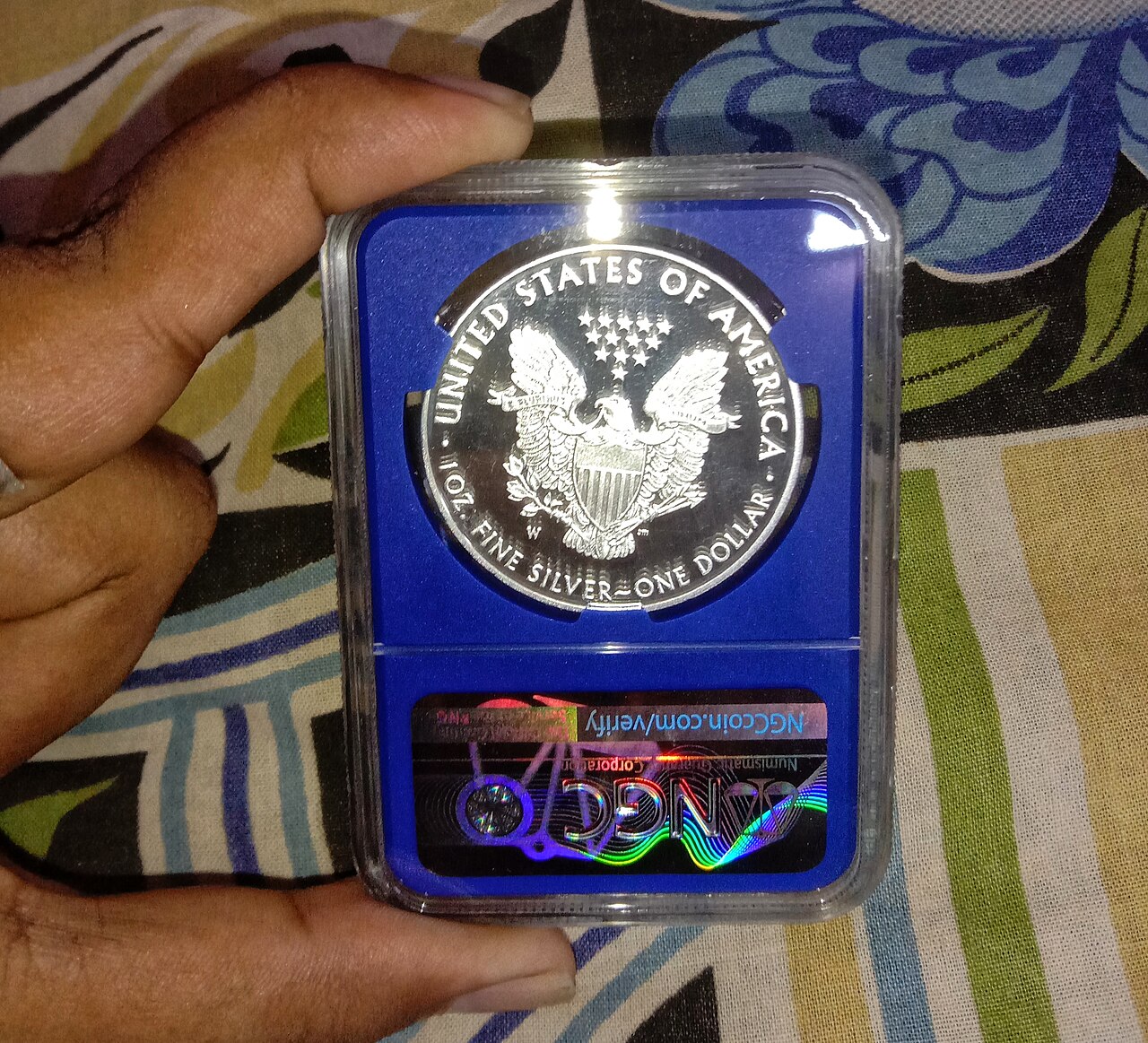 Feather detail on the Type 1 heraldic eagle reverse.
Type 1 (1986–2021): the heraldic eagle with a shield, 13 stars above, and E PLURIBUS UNUM on the ribbon. Look for sharply separated feathers, clean shield lines, a legible ribbon and evenly spaced lettering. Fakes often have merged feathers, soft shield lines or spacing errors.
Type 2 (mid-2021 onward): a new reverse showing an eagle coming in to land with an oak branch. Make sure the design matches the date: a Type 2 reverse on a coin dated before 2021 is fake, and so is a Type 1 reverse dated 2022 or later. Both types exist for 2021.
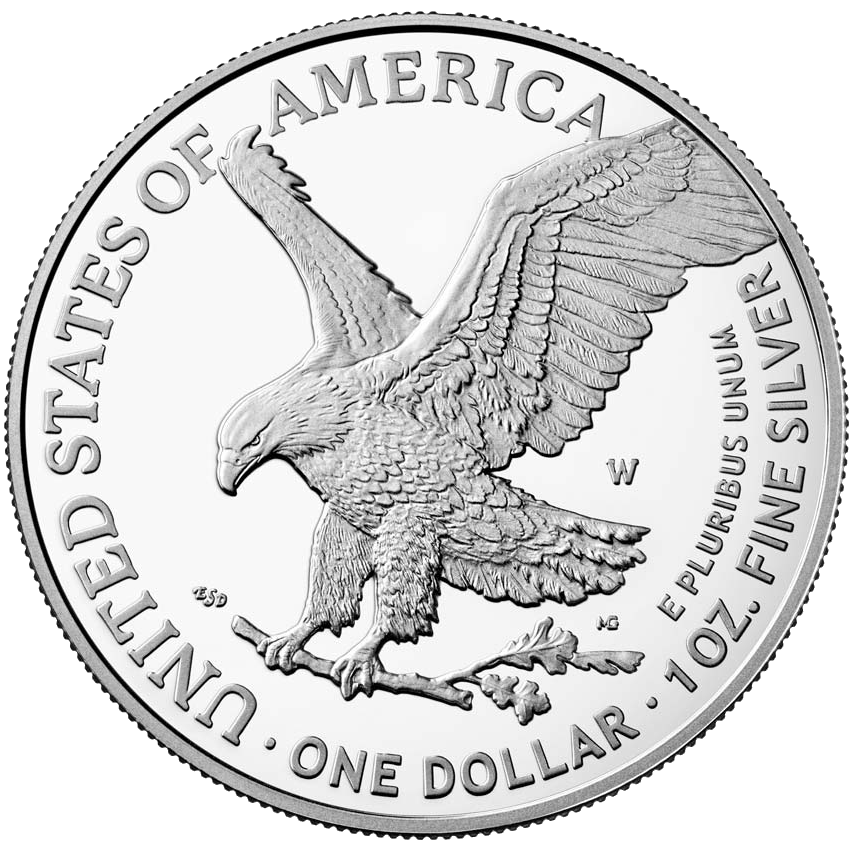 The Type 2 reverse introduced in 2021.
7. Edge
Genuine Silver Eagles have a reeded edge with even, consistent reeds. Under a loupe, check for:
- Uneven or irregular reed spacing
- Reeds that fade out before the rim
- A seam line running around the edge (a sign of a cast or two-piece fake)
- Bubbles, pits or porosity
8. Further testing
If a coin passes the basic checks but you still have doubts, a dealer can test it with a conductivity meter (such as a Sigma Metalytics verifier) or an XRF analyzer. Specific gravity testing (weighing the coin in air and in water) is another option at home.
Dates that need extra care
Bullion Silver Eagles are mostly worth their silver content, but some issues carry collector premiums and attract more counterfeiting:
- 1986: the first year of issue.
- 1995-W: a proof issued only in a 10th-anniversary gold proof set, with a very low mintage. It's one of the most valuable dates in the series. Buy it only in a PCGS or NGC holder and check the certificate number online.
- Special finishes and low-mintage proofs: such as Enhanced Reverse Proofs and the 2011 25th-anniversary set coins.
- 2021 Type 1: the last year of the original design.
For anything sold at a premium, a genuine grading-service holder with a certificate number you've verified is the best protection. Fake holders exist too, so check that the coin in hand matches the database photo where one is available.
Where risk is higher
Fakes most often turn up through sellers you can't hold to account: new or overseas marketplace accounts, social media listings, flea markets, and private sales. A price at or below the silver spot price is a strong warning sign, since genuine Silver Eagles normally sell above spot. Buying from an established dealer with a return policy greatly reduces the risk.
If you suspect a fake
- Stop. Don't sell it on or trade it, even with a warning.
- Test further. Repeat the weight, dimension and ping tests carefully, then have a dealer or assayer check it.
- Document it. Photograph the coin, your measurements and your purchase records.
- Contact the seller. Ask for a refund. If that fails, use your marketplace or card dispute process.
- Report it if you think a seller is knowingly dealing in fakes. In the U.S., counterfeits of U.S. coins can be reported to the Secret Service.
Quick checklist
- Weight close to 31.10 g
- Diameter and thickness match the facts box
- Not attracted to a magnet; slows a sliding magnet
- Ping test matches a genuine coin
- Sharp Walking Liberty and reverse details
- Reverse type matches the date
- Clean, even edge reeding with no seam
- Realistic price, reputable seller
About the American Eagle
First minted in 1986, the Silver American Eagle is the official silver bullion coin of the United States and the most popular silver coin in the world.
Authenticate Your American Eagle on the Go
Download Pingcoin for iPhone or Android to instantly verify your American Eagle and other precious metal coins using acoustic authentication.